
How Niles Canyon Road's Blind Curves Make Fremont Breakdowns More Dangerous Than a Straight Highway Stop

Key Takeaways
A breakdown on Niles Canyon Road is not merely an inconvenient stop. Curves, narrow edges, changing visibility, and two-way traffic can give approaching drivers very little time to react.
Try to reach the safest available stopping point without making a risky maneuver.
Treat every blind curve as a visibility problem, not just a roadside parking problem.
Keep passengers away from moving traffic and call 911 if the vehicle creates an immediate hazard.
Use hazard lights and reflective equipment only when doing so does not expose you to traffic.
Share precise landmarks, direction of travel, and road conditions with roadside assistance.
Why Niles Canyon Road creates a higher-risk breakdown scene
Niles Canyon Road follows a constrained canyon corridor rather than a broad, forgiving highway. The route connects Fremont and Sunol through a setting shaped by hills, vegetation, and curves; Niles Canyon provides useful geographic background on that corridor. When a vehicle stops there, the driver has fewer options for moving fully away from traffic.
A straight highway stop usually gives approaching motorists a longer view and more room to change lanes. On a canyon road, the danger can develop before either driver has enough space to respond. That difference is why a small mechanical problem can quickly become a roadside safety emergency.
Limited sight distance around canyon curves
A driver entering a bend sees only the portion of pavement that the curve exposes. A disabled vehicle around the next section may be hidden by the road itself until the approaching car is close. Even a careful motorist can have only a few seconds to recognize the stopped vehicle, choose a path, and brake.
The breakdown driver should think beyond the car's immediate position. A vehicle that is visible from inside its cabin may still be nearly invisible to traffic coming around the bend. Staying alert to the next curve, rather than focusing only on the engine problem, helps explain why calling for help promptly matters.
Narrow shoulders, uneven edges, and restricted pull-off space
A shoulder is not automatically a safe refuge. It may narrow, slope toward a ditch, break into gravel, or end before the vehicle is completely clear of the travel lane. Trying to force a disabled car onto an uneven edge can cause a second problem, including loss of control or damage underneath the vehicle.
The best stopping point is the farthest safe position the vehicle can reach under its own power. Drivers should avoid sudden steering across lanes or continuing when the car is overheating, losing control, or showing another serious fault. A practical way to compare the scene is to consider the road feature, its likely effect, and the safer response:
Road feature | Immediate concern | Safer response |
|---|---|---|
Blind bend | Late sight of the vehicle | Stay belted and warn traffic from safety |
Narrow shoulder | Car remains partly in lane | Move only if it can be done smoothly |
Uneven edge | Vehicle may slide or tip | Avoid aggressive steering onto the edge |
Limited pull-off | Little room for a service truck | Give responders exact landmarks |
This quick assessment keeps the goal realistic: reduce exposure without creating a crash while attempting to improve the position.
Two-way traffic, changing speeds, and limited escape routes
Niles Canyon Road carries traffic in both directions, so a stopped vehicle can be threatened from either side. Drivers may enter a curve at different speeds, and a motorist who sees the breakdown late may move toward the centerline or oncoming lane while trying to avoid it. That leaves very little predictable space for anyone standing outside the vehicle.
There may also be no comfortable escape route for a person on foot. A narrow edge, barrier, slope, or opposing traffic can turn a seemingly simple warning task into a dangerous one. For that reason, every movement should be deliberate, brief, and based on where traffic is actually traveling.
How hills, vegetation, and weather reduce driver visibility
The canyon's physical surroundings can obscure more than the curve alone. Hills can block a driver's view, vegetation can blend into the background, and changing light can make a dark car difficult to distinguish from the roadside. Rain, fog, and glare add another layer by reducing contrast and making road markings harder to read.
Drivers should assume that approaching traffic may not see the vehicle until very late. That assumption supports conservative choices: activate the car's lights, remain visible from a protected position when possible, and give emergency dispatchers a clear description of the obstruction.
What makes a disabled vehicle difficult for approaching drivers to see
A disabled vehicle does not need to be completely hidden to be dangerous. It may be visible in one direction and concealed in the other, or its warning lights may be lost against headlights, shadows, and vegetation. The visual problem changes constantly as each approaching vehicle moves through the bend.
The following image captures the kind of constrained, low-visibility setting that makes a canyon breakdown different from a stop on a straight highway.
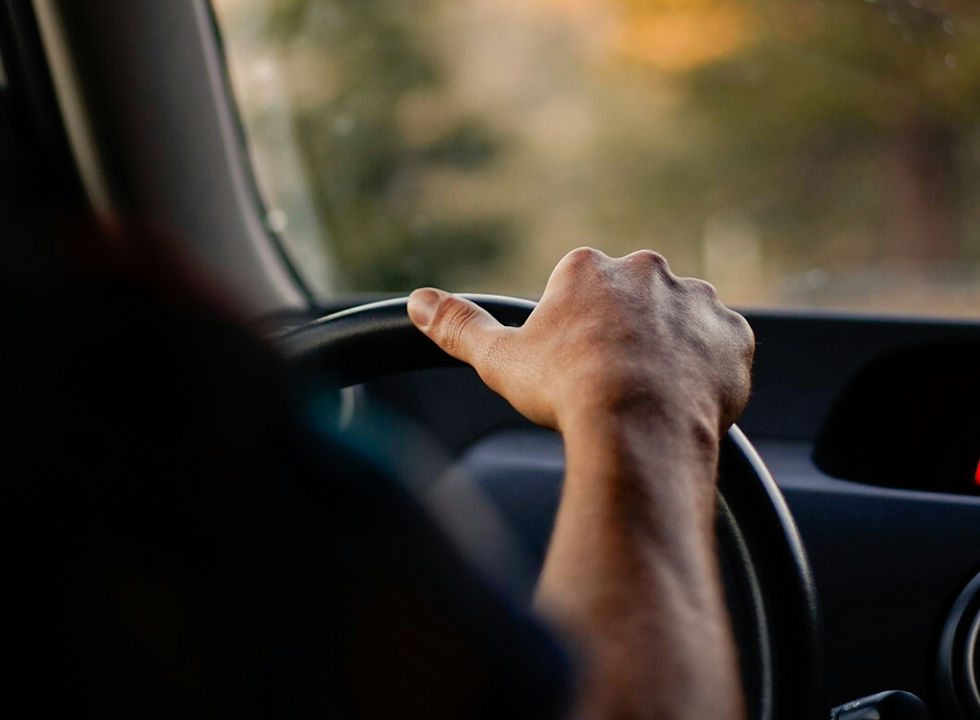
The key point is simple: being stopped is not the same as being conspicuous. Visibility must be considered from the perspective of the next driver, not just from the driver's seat.
A stopped car may appear only seconds before impact
On a straight road, a motorist may see a disabled car from far away and gradually adjust speed. Around a curve, the first view can arrive when the vehicle is already close. A driver who is traveling normally may need to brake, steer, and interpret the scene almost simultaneously.
That compressed reaction time is especially troubling when the disabled car occupies part of the lane. Hazard lights help, but they cannot overcome a physical obstruction that blocks the driver's line of sight. The safest strategy is to reduce the time the vehicle remains exposed and avoid placing people in the path of an evasive maneuver.
Curve geometry can hide warning triangles and hazard lights
Warning devices work only when approaching drivers can see them early enough. A triangle placed behind the vehicle may remain hidden around a bend, while hazard lights can be masked by a guardrail, parked angle, vegetation, or the crest of the road. Devices should never be placed automatically at a distance that requires walking into an unsafe lane.
The emergency triangle guidance offers a useful reminder that warning equipment must be placed strategically and only within a safe zone. On a narrow canyon road, that safe zone may be smaller than a driver expects, or it may not exist at all.
Headlights and shadows can distort distance at night
At night, headlights may illuminate the vehicle without making its distance obvious. A dark shoulder can disappear, and shadows cast by hills or trees can make the road seem open until the car is much closer. Oncoming headlights can also produce glare that briefly reduces a driver's ability to distinguish the disabled vehicle from the background.
A vehicle's hazard lights and headlights should remain on when appropriate, but people should not assume that illumination guarantees protection. Nighttime breakdown guidance, including this night breakdown safety advice, reinforces the need for visibility gear, a safe position, and clear communication while waiting.
Why a vehicle that seems safely parked may still be exposed
A car can be fully off the main lane and still sit within the recovery path of a driver who cuts a curve or drifts toward the edge. It may also block a narrow pull-off that another vehicle would otherwise use to avoid an obstruction. The apparent safety of the parking position depends on sight distance, shoulder width, and traffic behavior together.
Take a fresh look after stopping. If the car is partly hidden, passengers should not gather around it, and a person should not stand beside the vehicle simply because that side feels farther from traffic.
The first decisions to make when a vehicle fails
The first few decisions shape the risk that follows. A driver should control the vehicle as smoothly as possible, switch on warning lights, and assess whether the car can reach a better position without crossing into a more dangerous situation. Mechanical diagnosis comes later; location and exposure come first.
A calm sequence is more useful than trying to solve everything at once. The driver must weigh the vehicle's condition, the road's geometry, the number of passengers, and the movement of traffic before deciding whether anyone should exit.
Assessing whether the vehicle can reach a safer stopping point
If the engine still runs and steering and braking feel normal, continue only far enough to reach a clearly safer place. Do not push through severe overheating, smoke, major fluid loss, a failing tire, or a loss of steering control. A short distance is not worth turning a roadside issue into a collision.
Use smooth inputs and avoid stopping just beyond a curve where the vehicle becomes hidden from the next approach. If forward movement is unsafe, keep the car as far from the travel lane as the conditions allow and prepare to explain its exact position to dispatch.
When to remain inside versus exit from the traffic side
There is no universal rule that makes exiting safer. In some situations, staying buckled inside with doors closed provides more protection than walking along a narrow shoulder. In others, a vehicle stopped in an active lane may require occupants to move away from immediate impact risk, but only if a safe route exists.
Never step into traffic to inspect a tire, retrieve an item, or place a warning device without first considering approaching vehicles. The traffic side is especially dangerous because a person may be hidden from drivers in exactly the same way as the car.
Positioning passengers away from moving traffic
Passengers should stay together and away from the edge nearest moving vehicles whenever a protected location is available. Children, older adults, and anyone with mobility limitations need extra planning because a quick exit can become disorganized. Keep belongings secured so nobody has to return to the vehicle.
The Fremont breakdown guide also stresses safety, communication, and preparing a vehicle for towing. Those principles apply here, but the canyon's restricted space means the safest passenger position may be inside the vehicle until help arrives.
Calling 911 when the vehicle is creating an immediate hazard
Call 911 when the vehicle is in a live lane, around a blind curve, blocking traffic, or otherwise creating an immediate collision risk. Give the dispatcher the road name, direction of travel, nearest landmark, lane position, and whether anyone is injured. If conditions change, update the information rather than assuming responders can infer the new danger.
For a non-immediate mechanical problem, roadside assistance may be appropriate, but emergency services should be contacted when traffic cannot safely pass or people are exposed. Clear facts help responders decide whether traffic control is needed before a tow can begin.
How to warn approaching traffic without increasing your risk
Warning other motorists is useful only if the warning can be delivered without putting another person in harm's way. A driver standing around a bend may be invisible until an approaching vehicle is already committed to the curve. The car's lights, a phone call to emergency services, and a protected position often do more good than an improvised attempt to direct traffic.
The scene below illustrates why visibility equipment must be paired with distance, patience, and an exit plan rather than used as a reason to remain near the lane.
The safest warning is one that improves recognition while keeping people out of the traffic stream. If that balance cannot be achieved, return to a protected position and wait for trained responders.
Turning on hazard lights and keeping headlights visible
Turn on hazard lights as soon as the vehicle is stopped, provided the electrical system allows it. Headlights can help define the vehicle's position in low light, while interior lights may make occupants more visible if they must remain inside. Keep the car's position stable and avoid repeatedly switching lights off while testing other equipment.
Lights are an alert, not a shield. They should be paired with a prompt call for assistance and a careful assessment of whether the vehicle is visible from the approach to the curve.
Using reflective devices only from a safe location
Reflective triangles, a vest, or a flashlight can improve recognition, but retrieving and placing them may expose a person to traffic. Use them only from a location that does not require walking in the lane or crossing an active roadway. If the shoulder is narrow or the next bend is too close, leaving the equipment unused may be the safer choice.
The purpose of a device is to create earlier recognition, not to make a risky roadside walk seem worthwhile. Tell the dispatcher whether warning equipment was placed and where, so responders know what to look for.
Choosing where to stand if leaving the vehicle is unavoidable
If leaving is unavoidable, move toward the side farthest from moving traffic and choose a position with the greatest separation from the lane. Avoid standing in front of or behind the vehicle, where a driver making an evasive move may travel. Never stand on the outside of a curve simply because it offers a wider view.
Keep the group still and visible to one another. A person who walks ahead to flag cars may disappear behind the bend, while someone who stays at the vehicle may be struck by a driver who does not see the stopped car in time.
Why relying on another driver to slow down can be dangerous
A passing motorist may not see the vehicle, may misunderstand the hand signal, or may have no safe way to change course. Their reaction can also cause a secondary collision with oncoming traffic. Assuming that someone else will create a safe buffer leaves the breakdown driver without control over the most important variable: time.
Distance matters more than confidence in this setting. The goal is to increase the space available for recognition and response, not to persuade individual drivers to make a last-second maneuver.
How roadside assistance should approach a Niles Canyon breakdown
A roadside service call begins before the tow truck reaches the vehicle. The service provider needs a precise location, a description of the vehicle's position, and enough information to anticipate access problems. Curves, narrow shoulders, and opposing traffic can affect where the service vehicle parks and how equipment is deployed.
A careful approach protects both the stranded driver and the technician. Central Towing describes towing, recovery, and equipment transport services in the Fremont and Bay Area, while the actual roadside scene still determines what can be done safely and when.
Confirming the exact location using landmarks and direction of travel
A road name alone may not identify a safe approach point. Share the direction of travel, the nearest visible landmark, the closest curve or bridge, and whether the vehicle is on the shoulder or partly in a lane. A dropped pin or live location can help, but it should supplement a plain-language description.
If the car is hidden from one direction, tell the provider which way traffic is approaching it. This can help the operator select a safer staging position and avoid passing the vehicle before finding a place to turn or stop.
Towing and recovery challenges on curved, narrow road sections
A tow operator may need to manage limited clearance, an uneven edge, and traffic that cannot easily move around the scene. Connecting equipment beside a curve can be difficult when the disabled vehicle is not aligned with the road. Recovery may require extra caution, traffic control, or a different approach than a routine city pickup.
The driver should follow the operator's instructions and avoid starting the vehicle, releasing a brake, or moving the steering wheel unless asked. Small changes can affect the recovery setup when there is little room to work.
Coordinating with law enforcement or road authorities
If the vehicle blocks a lane or creates a serious sight-distance hazard, law enforcement or road authorities may need to help manage traffic. Their role can include slowing or redirecting vehicles while the service provider works. The breakdown driver should report the hazard rather than trying to perform traffic control independently.
Road conditions can also change after a storm. A prior road closure update shows why debris or storm damage can alter access and require an alternate route; current conditions should always be confirmed before a responder commits to a difficult approach.
Why a roadside technician may need to stage the service vehicle carefully
A large service vehicle needs room to stop, deploy equipment, and leave without trapping itself or narrowing the road further. The operator may stage farther away, approach from a different direction, or wait for a safer traffic gap. That can feel slow from inside the disabled car, but careful positioning reduces the chance of a second incident.
Stay in contact, keep passengers in the safest available position, and make the vehicle easy to identify without standing in the lane. Once the technician arrives, explain any steering, brake, wheel, or electrical problems before the vehicle is moved.
Weather and traffic conditions that can amplify the danger
Road geometry is only part of the risk. Rain, fog, darkness, debris, and heavy traffic can shrink the margin that remains around a disabled vehicle. A location that feels manageable in clear daylight may become far more exposed after sunset or during a storm.
Check conditions before entering the canyon, and be ready to postpone the trip when visibility or road access is poor. The following video placeholder can provide general background on safe driving around curves and roadside hazards, but it cannot replace current road information or emergency instructions.
Conditions should be treated as changing factors, not fixed characteristics of the route. If visibility deteriorates, slow down early and reconsider whether continuing is sensible.
Rain-slick pavement and reduced braking distance
Wet pavement can lengthen the distance needed to stop and make sudden steering less predictable. Water may also collect along the edge, where a disabled vehicle or a person could be difficult to see. Drivers approaching a stopped car need more time, yet a curve may provide less of it.
Use gentle braking and avoid placing yourself outside the vehicle unless there is a clear safety reason. A disabled vehicle should be treated as especially vulnerable during the first minutes of a rainstorm, when road conditions can change quickly.
Fog, darkness, and glare from oncoming headlights
Fog reduces contrast and can erase the outline of a car until it is close. Darkness hides shoulder details, while oncoming headlights can temporarily overwhelm a driver's vision. Together, these conditions make hazard lights less effective than they appear from nearby.
If visibility is poor, keep the vehicle's lights on, stay as far from the lane as possible, and describe the conditions to dispatch. A responder may need to approach more slowly or use additional traffic protection.
Fallen branches, flooding, and storm-related obstructions
A branch, washout, or flooded section can force traffic toward a disabled vehicle or block the only usable shoulder. It can also prevent a tow truck from reaching the scene by the expected route. Do not drive through water or around debris simply to find a better pull-off if doing so risks losing control.
Report the obstruction along with the breakdown. If the route is closed, follow official directions rather than attempting to bypass barriers or damaged pavement.
Weekend, commuter, and event traffic considerations
Traffic volume changes the number of chances a driver has to encounter the disabled vehicle before help arrives. Commuter periods may bring a steady stream of vehicles, while weekends or local events can produce bursts of traffic from drivers who are unfamiliar with the road. More traffic means more potential conflicts around a narrow stop.
Plan for the busiest likely period, not only the quietest time you remember. Give the service provider an honest description of congestion so the response plan reflects the real scene.
How Fremont drivers can reduce breakdown exposure before the trip
Preparation cannot remove the canyon's curves, but it can reduce the likelihood of stopping in the worst place. A few minutes spent checking the vehicle and planning communication may prevent a minor warning sign from becoming a roadside emergency. The goal is not perfect certainty; it is more time and more choices.
Before leaving Fremont, inspect the car with the route in mind. General guidance on vehicle preparation for remote driving is useful because it connects maintenance, route planning, and driving habits to the possibility of mechanical trouble.
Checking tires, brakes, fluids, and battery condition
Look for low tire pressure, damaged tread, fluid leaks, weak starting behavior, unusual noises, and warning lights. Brake vibration, a pulling sensation, or overheating should be addressed before entering a corridor where stopping space is limited. A battery that is already struggling may fail at the least convenient point.
Maintenance decisions should be based on symptoms and the vehicle manufacturer's recommendations. Do not ignore a small problem simply because the trip is short; a short canyon section can still leave little room for recovery.
Carrying visibility and communication equipment
Keep a charged phone, vehicle charger, flashlight, reflective vest, and warning devices in an accessible place. Water, basic first-aid supplies, and weather-appropriate clothing can also matter if a response takes time. Store the kit where it can be reached without unloading passengers into traffic.
A small equipment check before departure can be organized around four essentials:
A charged phone and backup power source.
A flashlight with working batteries.
Reflective clothing or visibility equipment.
Water and basic emergency supplies.
These items do not make it safe to enter a traffic lane. They simply give the occupants better options from a protected position while help is arranged.
Planning a safer pull-off strategy before entering the canyon
Know where the route widens, where a legal stopping area may exist, and which landmarks can help identify your position. If the car begins losing power, avoid waiting until it reaches a blind bend before deciding what to do. A preplanned stopping strategy makes it easier to choose a modest improvement in position without panic.
Save roadside assistance information before departure. Central Towing can be contacted for towing help when the situation calls for a service provider, but the driver should still call 911 first when the vehicle presents an immediate traffic hazard.
Knowing when to postpone travel or choose an alternate route
Postpone the trip when the vehicle has an unresolved safety problem, visibility is severely reduced, or official information indicates closures or storm damage. An alternate route may take longer but provide wider shoulders, clearer sight distance, and more places to stop. That tradeoff is often worthwhile when the original road offers few escape options.
Before setting out, review current conditions and allow extra time. The safest breakdown is the one avoided by fixing the car, delaying the trip, or choosing a road that leaves more room for an unexpected stop.
Conclusion
Niles Canyon Road's blind curves make a Fremont breakdown more dangerous because they compress sight distance, restrict stopping space, and leave little room for people or approaching drivers to recover from a mistake. Move only when it is safe, keep passengers protected, warn traffic without entering its path, and give responders precise information. Those choices turn a frightening roadside failure into a more controlled emergency.
Frequently Asked Questions
Why are breakdowns on Niles Canyon Road more dangerous than stops on a straight highway?
Curves, hills, narrow shoulders, and two-way traffic can hide a disabled vehicle until approaching drivers are close, leaving less time and space to brake or steer around it.
Should I try to drive farther after my vehicle begins failing?
Only if the vehicle remains controllable and you can reach a clearly safer stopping point without crossing into danger. Do not continue through smoke, severe overheating, steering problems, or major brake or tire failure.
Is it safer to stay inside a disabled vehicle?
Often, staying belted inside with doors closed is safer than standing near traffic, but the right choice depends on whether the vehicle is in an active lane and whether a protected exit route exists.
When should I call 911 for a breakdown?
Call 911 when the vehicle blocks a lane, sits around a blind curve, creates an immediate collision hazard, or when anyone is injured or in immediate danger.
Should I place warning triangles behind my car?
Use warning devices only if you can place them without entering an active lane or walking through an unsafe area. A device that requires a dangerous roadside walk is not worth the added exposure.
What information should I give roadside assistance?
Provide the road name, direction of travel, nearest landmark, vehicle description, lane or shoulder position, traffic conditions, and any hazards such as flooding, debris, or poor visibility.
Can weather change the risk of a breakdown on the canyon road?
Yes. Rain, fog, darkness, glare, flooding, and fallen branches can reduce visibility, lengthen stopping distances, restrict access, and make both the vehicle and its occupants harder to protect.
Comments